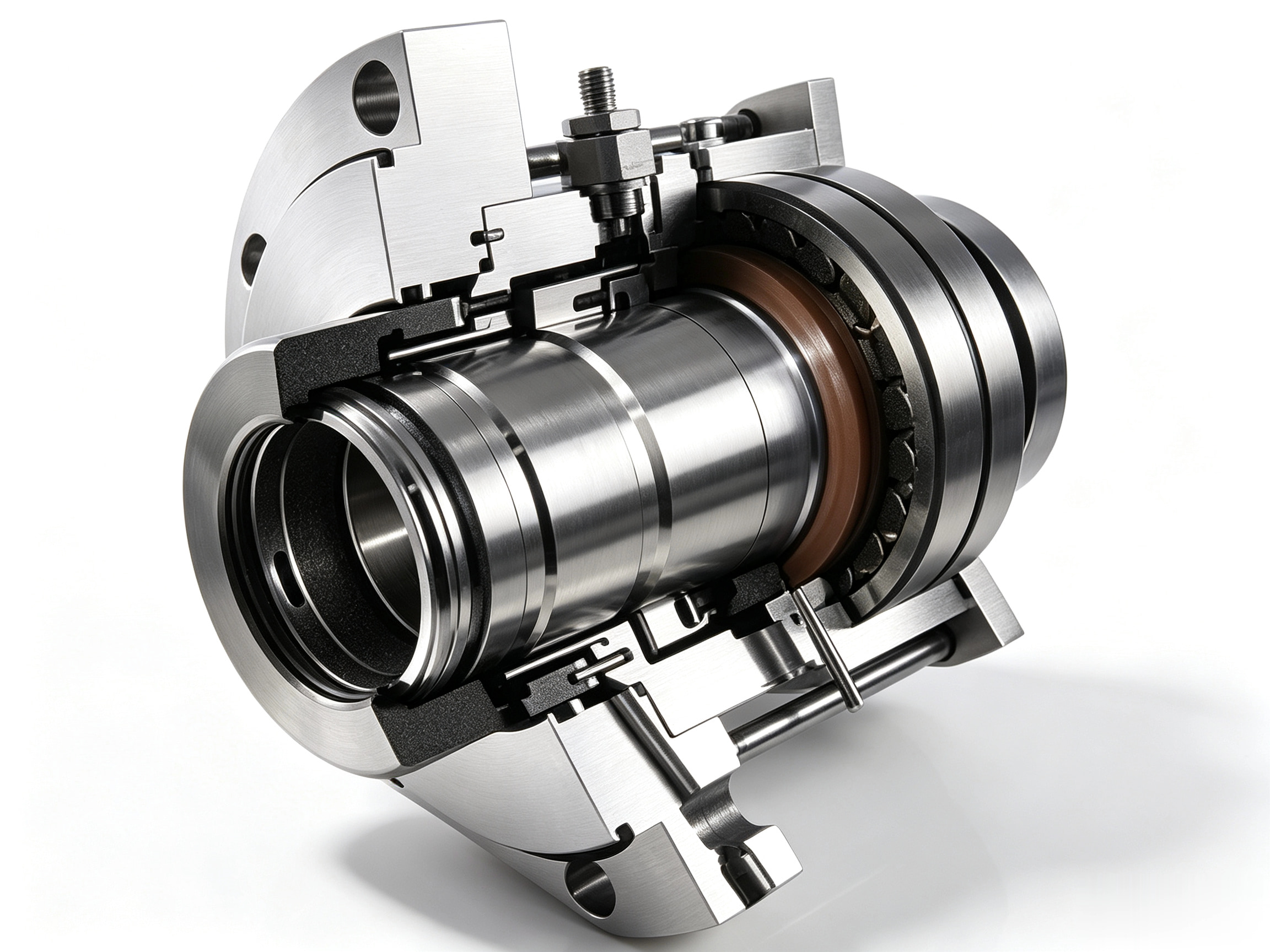
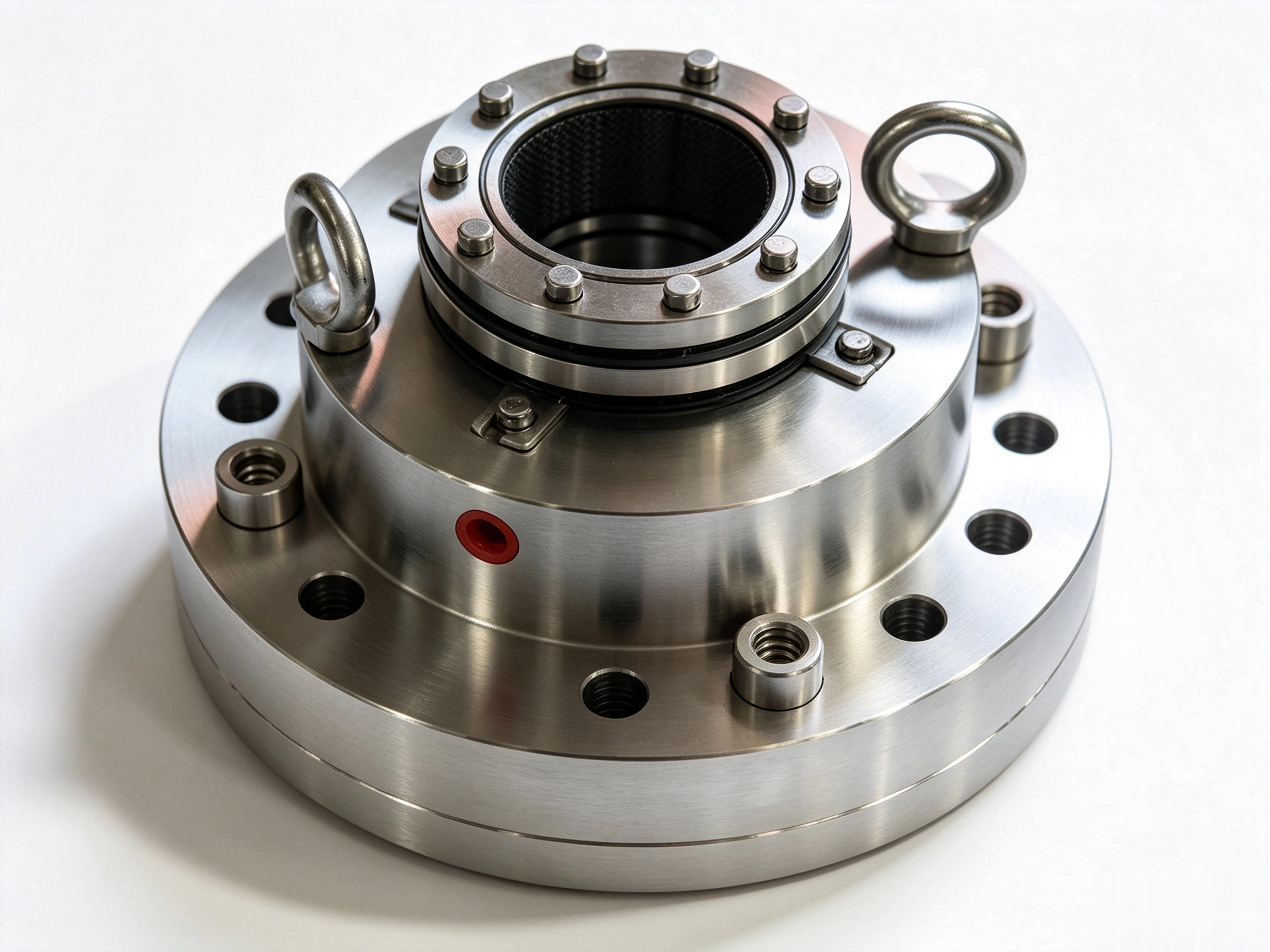
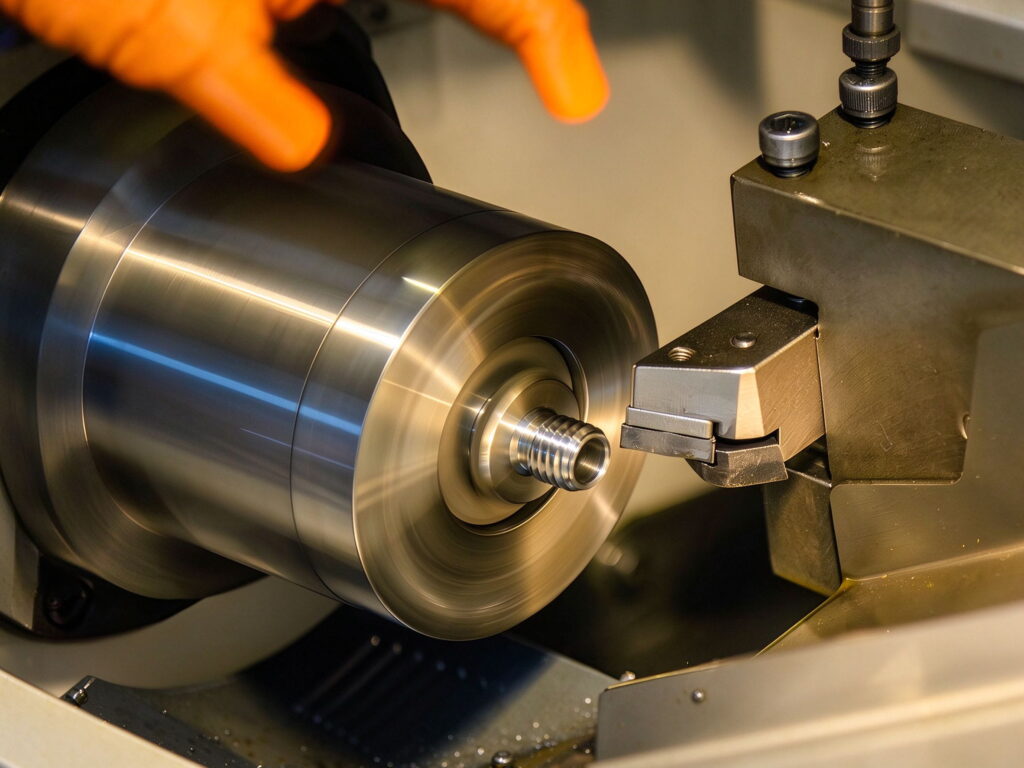
The sealing end face of a liquid-lubricated mechanical seal (wet mechanical seal) is formed by the process medium or external isolation liquid to form an extremely thin liquid film of 0.5-3μm, which combines lubrication, cooling and sealing functions. It is the most mature and widely used form of mechanical seal. The single end face is directly lubricated by the medium, and the double end face introduces pressurized isolation fluid. It is suitable for pumps, kettles and mixers with clean water, sewage, oil and most chemical media.
This category isLiquid lubricated mechanical seal, the end face is lubricated by a liquid film (process medium or isolation liquid), selected according to medium, pressure, temperature and speed, and can be matched with API 682 flushing scheme.
Liquid‑Lubricated Mechanical Seal: Selection and Operating Guidelines
Liquid film lubrication · End face cooling · Mature and stable
Operating principle
The rotating ring turns with the shaft; the liquid between the faces generates hydrodynamic and hydrostatic pressure as it moves and converges, creating a stable film that microscopically separates the two faces. A single‑face seal is lubricated directly by the sealed fluid, while a double‑face seal introduces a clean barrier fluid at a pressure higher than the process fluid.
Structure and Materials
Available as single‑face, double‑face, or cartridge designs; common friction pairs are silicon carbide‑on‑silicon carbide or silicon carbide‑on‑graphite, with secondary seals of fluoro‑rubber or PTFE. Metal components are primarily 304 stainless steel, with 316 as an option, selectable based on operating conditions.
Selection and Installation
Select the seal according to the medium properties, pressure, temperature, rotational speed and shaft diameter. For media containing particles or prone to crystallization, provide a flushing/quench plan. During installation, keep the seal faces clean, avoid impact, and ensure shaft alignment and venting of the seal chamber.
In a liquid-lubricated seal, the faces are lubricated by a fluid film formed from the medium or barrier fluid; the design is mature and widely applicable. In a dry gas seal, the faces are machined with spiral grooves and operate on a gas film, making them suitable for high-speed, gas-phase applications.
Use a single seal for general media such as clean water and oils; use a dual seal for flammable, explosive, toxic, crystallization-prone or particle-laden media, introducing a barrier fluid at a pressure higher than the medium.
During normal operation, the fluid film between the faces is approximately 0.5\u20133 \u03bcm; a film that is too thin accelerates wear, while one that is too thick increases leakage.
Failure to prime the pump before startup, lack of liquid or insufficient flow in the seal chamber, and vaporization of the medium all disrupt the fluid film. Ensure proper priming, venting and flushing.